AI Automation for Business UK: A Practical Implementation Guide for 2026

Why AI Automation for Business UK Is the Top Operational Priority in 2026
The conversation around automation has shifted fundamentally. Three years ago, automation for business meant basic Zapier workflows and RPA bots running on spreadsheets. In 2026, AI automation for business means end-to-end intelligent workflows that read documents, interpret emails, make decisions, and take actions across multiple systems — without human input. UK businesses that have deployed AI automation are reporting 40–60% reduction in manual process time, with payback periods measured in months rather than years.
This guide covers what UK business owners and operations directors need to know when evaluating AI automation: what it can realistically deliver, which processes to target first, and how to avoid the implementation failures that waste budget without generating results.
What AI Automation for Business Actually Means
AI automation for business combines several capabilities that previously required separate tools and separate teams:
- Intelligent document processing: Reading invoices, contracts, forms, and emails — extracting structured data, classifying content, and routing it without manual review.
- Decision automation: Applying rules, scoring models, or LLM reasoning to make operational decisions — approvals, escalations, categorisations — at the point where a human would previously have had to judge.
- Workflow orchestration: Connecting actions across your CRM, accounting system, email, and any other business tool — triggering the right action in the right system based on what happens upstream.
- AI chatbots and communication: Handling inbound queries, triaging support requests, drafting responses, and routing conversations based on intent — at a scale and consistency a human team cannot match.
Most UK B2B businesses have three to five processes that qualify for AI automation — typically involving manual data entry, document review, email triage, or structured decision-making. The challenge is identifying the right starting points.
The Highest-ROI AI Automation Opportunities for UK Businesses
Based on implementations across UK professional services, e-commerce, financial services, and SaaS firms, the processes that consistently generate the fastest payback are:
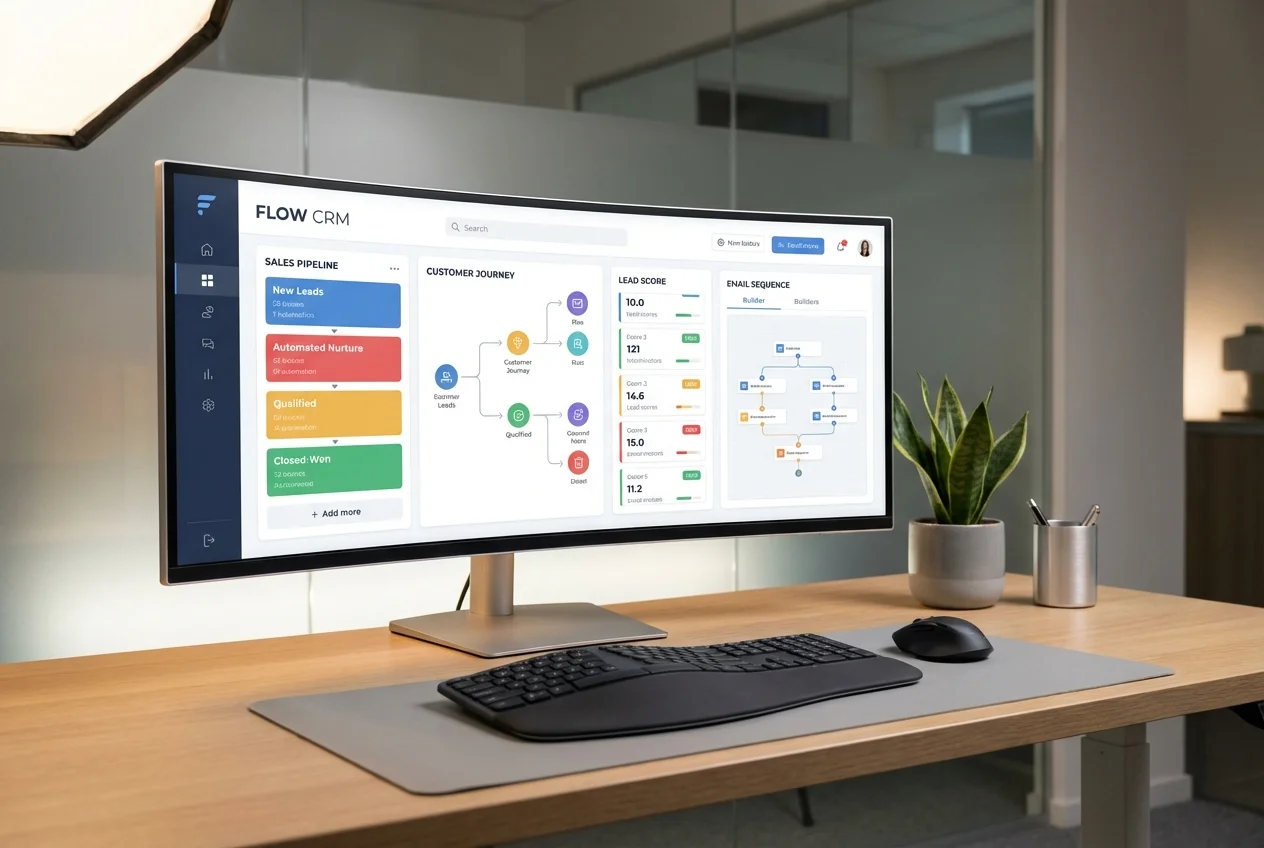
- CRM automation: Lead routing, follow-up sequencing, deal stage updates, and renewal alerts — removing the manual coordination that causes leads to go cold and renewals to lapse. UK businesses using CRM automation report 25–40% improvement in pipeline conversion from leads that would otherwise have been missed.
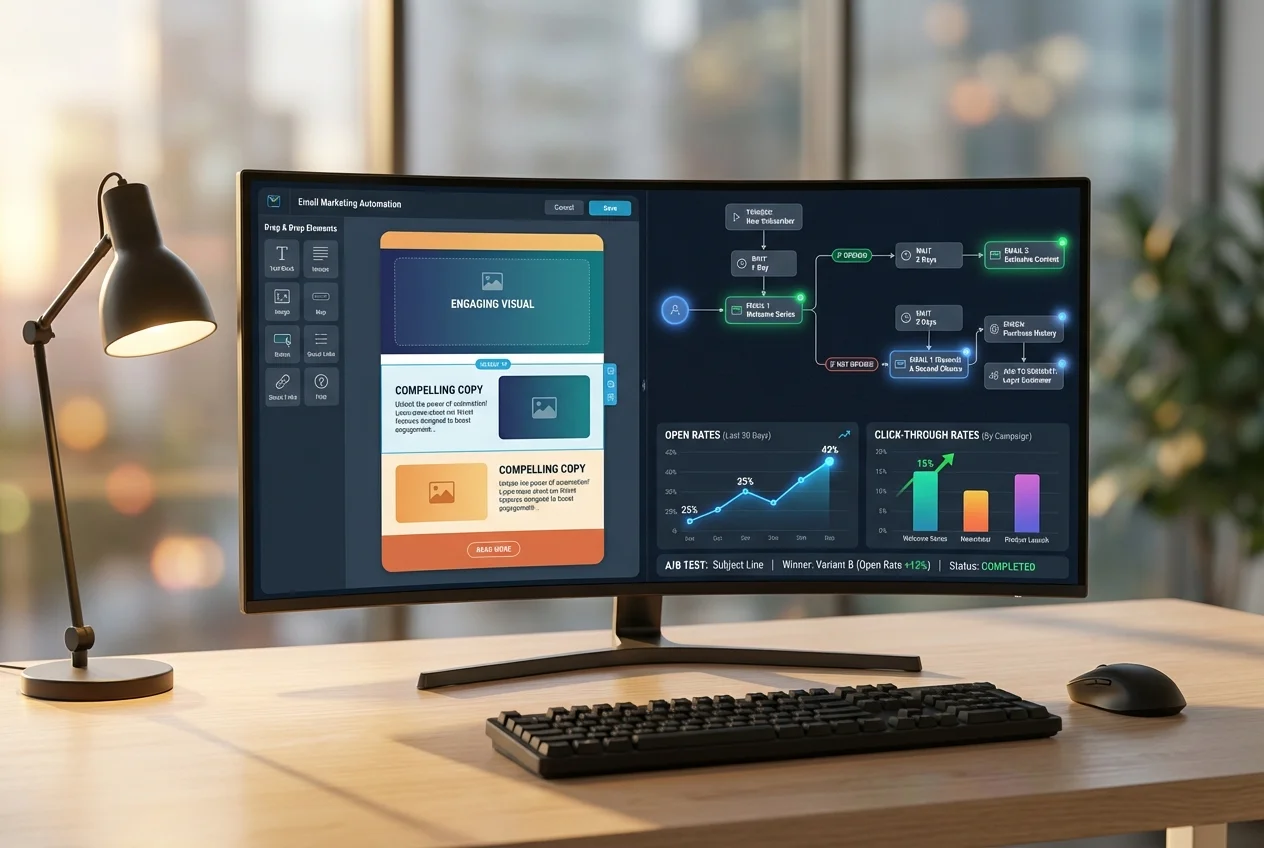
- Email and inbox automation: Classifying and triaging inbound enquiries, extracting structured data from emails, drafting acknowledgement responses, and routing to the right team member. For UK B2B firms handling 50+ enquiry emails per day, this saves two to four hours of senior time daily.
- Document processing: Invoice extraction, contract data capture, compliance document checking. Data pipeline automation workflows that process documents as they arrive eliminate manual data entry cycles entirely.
- AI workflow automation: End-to-end AI workflow automation for multi-step business processes — combining triggers, decisions, actions, and escalations in a single managed system.
- Reporting and analytics: Automated dashboards, weekly performance summaries, anomaly alerts — transforming data that currently requires a person to compile into automated outputs that arrive on schedule.
The Cost of AI Automation for Business UK
UK businesses evaluating AI automation often assume the investment is significant. In practice, the cost structure is straightforward:
- Simple workflow automations (lead routing, basic integrations): £1,000–£5,000 to build, with minimal ongoing platform costs of £50–£200/month.
- Mid-complexity AI workflows (document processing, email triage, AI chatbots): £5,000–£15,000, with ongoing costs of £200–£800/month depending on volume.
- Enterprise AI automation programmes (multiple connected workflows, custom AI logic, full stack integration): £25,000–£80,000 over eight to sixteen weeks.
Most UK businesses handling more than 200 manual tasks per month find that even a simple AI workflow automation pays back within three to six months. Our AI automation cost guide provides a full breakdown of what drives pricing.
How to Prioritise Which Processes to Automate First
The prioritisation framework that consistently delivers results for UK businesses starts with three questions:
- Volume: How many times does this process happen per day or per week? High-volume processes generate the highest return because the labour saving compounds with every repetition.
- Manual time per instance: How long does one person spend on each repetition? Processes that take 15–30 minutes of skilled time and run 10 times a day are worth automating. Processes that take two minutes and run twice a week are not.
- Error risk: What is the cost of a mistake in this process — in rework time, customer impact, or compliance exposure? High-error-risk processes are strong automation candidates even at lower volumes, because the quality benefit adds to the labour saving.
The outcome of applying this framework is typically a clear top-three list that forms the basis of a phased implementation roadmap. Our process consulting service takes this analysis further — interviewing the people who actually do the work, building a scored opportunity matrix, and producing ROI models for your top opportunities before any build begins.
The Most Common AI Automation for Business Failures
Implementation failures in UK business automation follow consistent patterns:
- Building without measuring: Automating a process without a baseline measure of current time spent, error rate, and cost. Without a baseline, you cannot demonstrate ROI — which means you cannot justify the next phase of investment.
- Automating the wrong processes first: Starting with technically interesting processes rather than high-volume, high-value ones. The process consulting stage exists specifically to avoid this mistake.
- No exception handling: Every automated process has exceptions. Deployments that do not design an escalation path for exceptions either fail silently (creating errors nobody catches) or fail noisily (breaking the whole workflow). Production-grade AI automation for business always includes a defined human-in-the-loop path.
- Vendor dependency: Automation built on a single vendor platform without proper documentation. Your business should own the workflow logic and the ability to modify and extend it independently — we design for your independence, not your dependency.
AI Automation Consulting UK: Expert Guidance Before You Build
For UK businesses new to AI automation, or those that have had mixed results with previous implementations, working with an experienced AI automation consultant before committing to a build is the highest-leverage investment you can make. An experienced AI and automation consulting engagement identifies your three highest-ROI opportunities, gives you realistic build costs and payback timelines, and eliminates the risk of spending budget on automations that do not deliver.
If you are evaluating AI automation for business UK options and want an independent expert view on where to start, the fastest path is a 30-minute scoping call. We will map your current manual processes, identify the top three AI automation opportunities, and give you a fixed-price estimate for each — no obligation. Book a free AI automation assessment and see our guide to choosing an AI automation agency.
 AI Workflow Automation
 CRM Automation
 Email & Marketing Automation