AI and Marketing Automation Agency UK: Combining CRM, Email and AI to Drive B2B Growth in 2026
What an AI and marketing automation agency actually builds
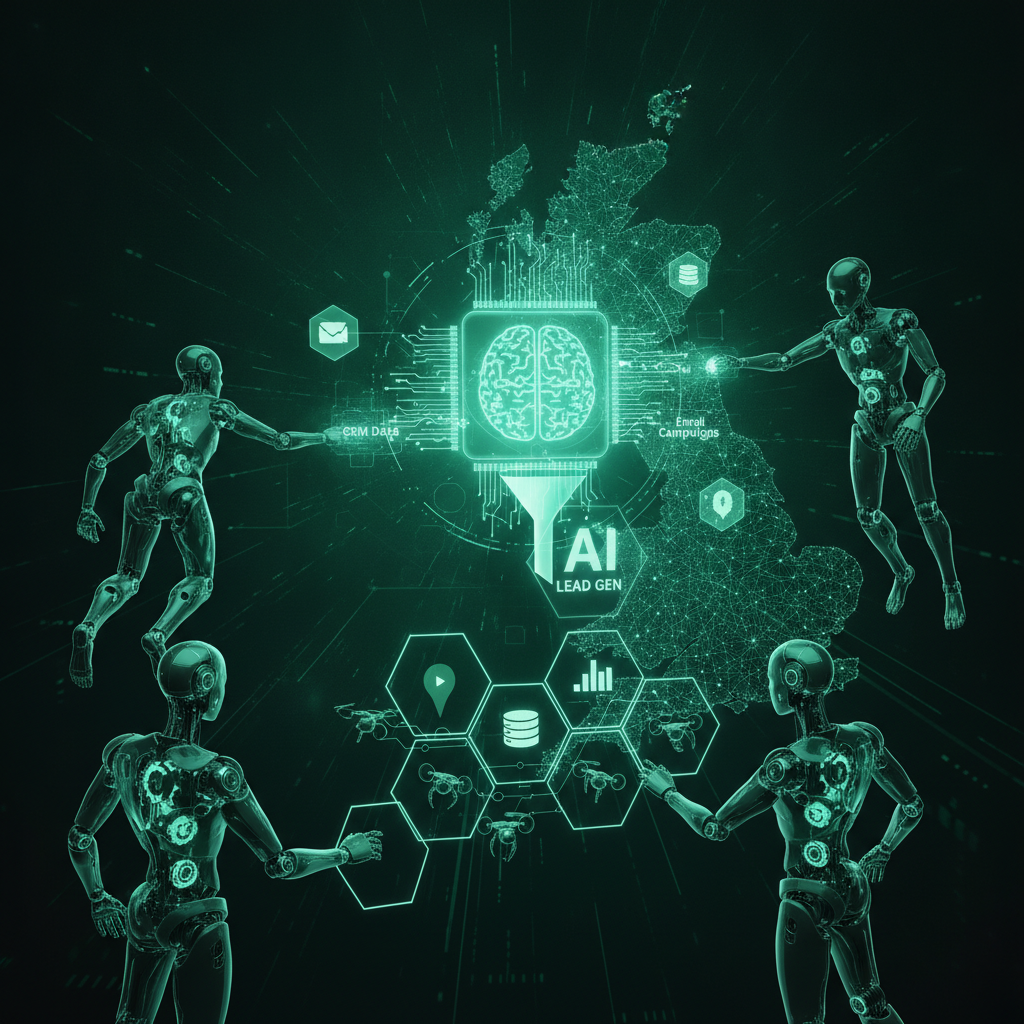
Marketing automation — in its traditional form — means email sequences, lead scoring rules, and CRM workflows that trigger based on contact behaviour. In 2026, UK B2B businesses are combining this with AI to do something significantly more powerful: systems that not only trigger actions based on behaviour, but adapt those actions based on what is most likely to convert a specific contact at a specific point in their buying journey.
An AI and marketing automation agency builds the underlying infrastructure that makes this possible: the CRM workflows that route qualified leads instantly to the right sales rep, the email sequences that adapt tone and content based on the recipient's industry and engagement history, the AI layer that scores and prioritises leads based on intent signals from multiple data sources, and the reporting pipelines that connect campaign activity directly to closed revenue. The result is a system that generates and nurtures B2B leads continuously — without requiring manual intervention at each step.
This is distinct from what a standard marketing agency delivers. A marketing agency designs campaigns and manages channels. An AI and marketing automation agency builds the infrastructure that makes those campaigns work at scale — and keeps working when the marketing team is focused elsewhere.
The three layers of AI and marketing automation for UK B2B
Effective AI and marketing automation for UK B2B businesses operates across three layers. Most businesses have partial implementations at one or two layers; the highest-performing ones have all three working together.
Layer 1: CRM and lead routing automation
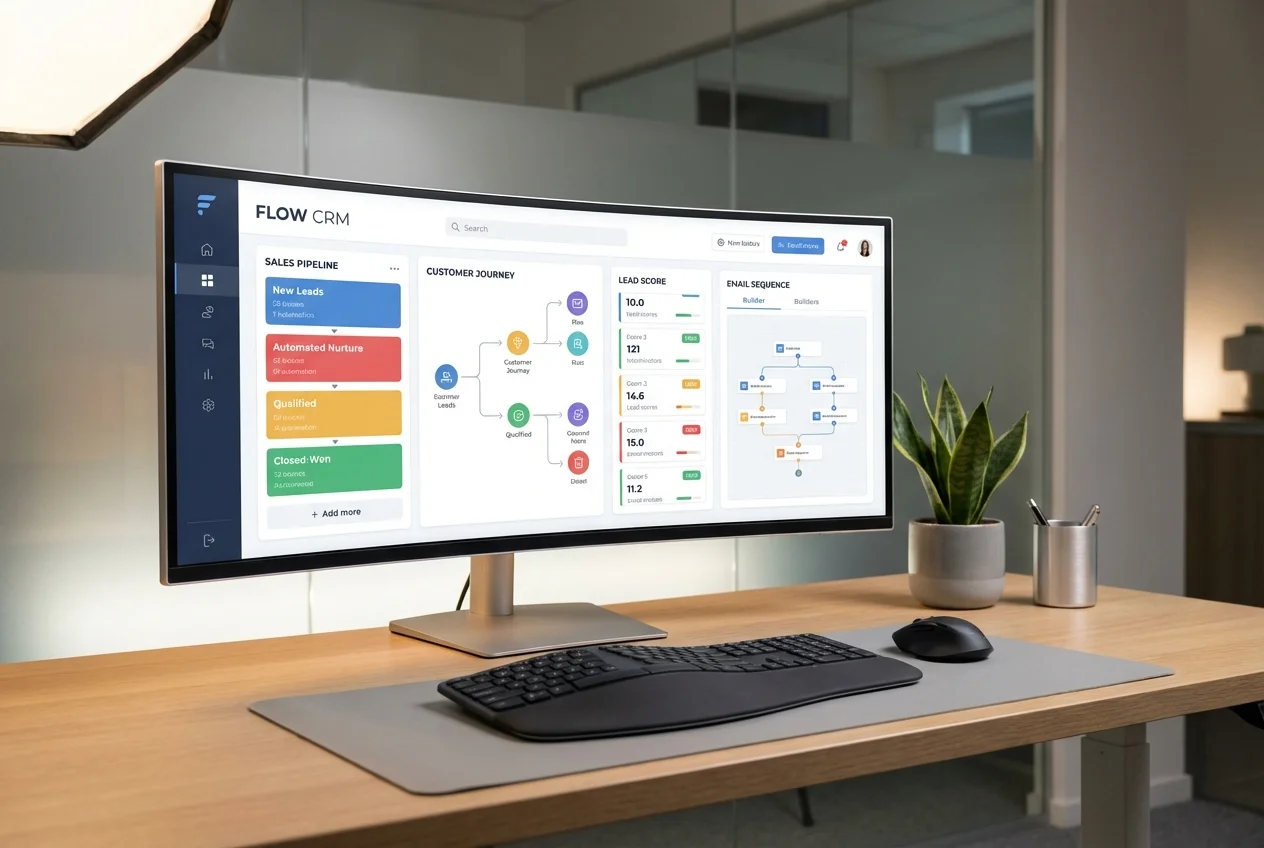
The foundation of any B2B marketing automation system is accurate, immediate CRM data and reliable lead routing. When a prospect fills out a contact form, downloads a guide, or books a demo, the automation should instantly: create or update the contact record with all available enrichment data (company size, sector, LinkedIn profile, technology stack); score the lead based on fit and intent criteria; route the lead to the right sales rep or sequence based on territory, deal size, or product interest; and trigger the first follow-up within minutes, not hours.
The difference between a 5-minute response and a 24-hour response to a B2B lead inquiry is, on average, a 10× difference in the probability of conversion. Most UK B2B businesses lose this window because the routing and follow-up process is manual. Our CRM automation service builds the infrastructure that closes this gap — routing, enrichment, and initial follow-up happening automatically, in real time, without human intervention.
Layer 2: AI-enhanced email sequences
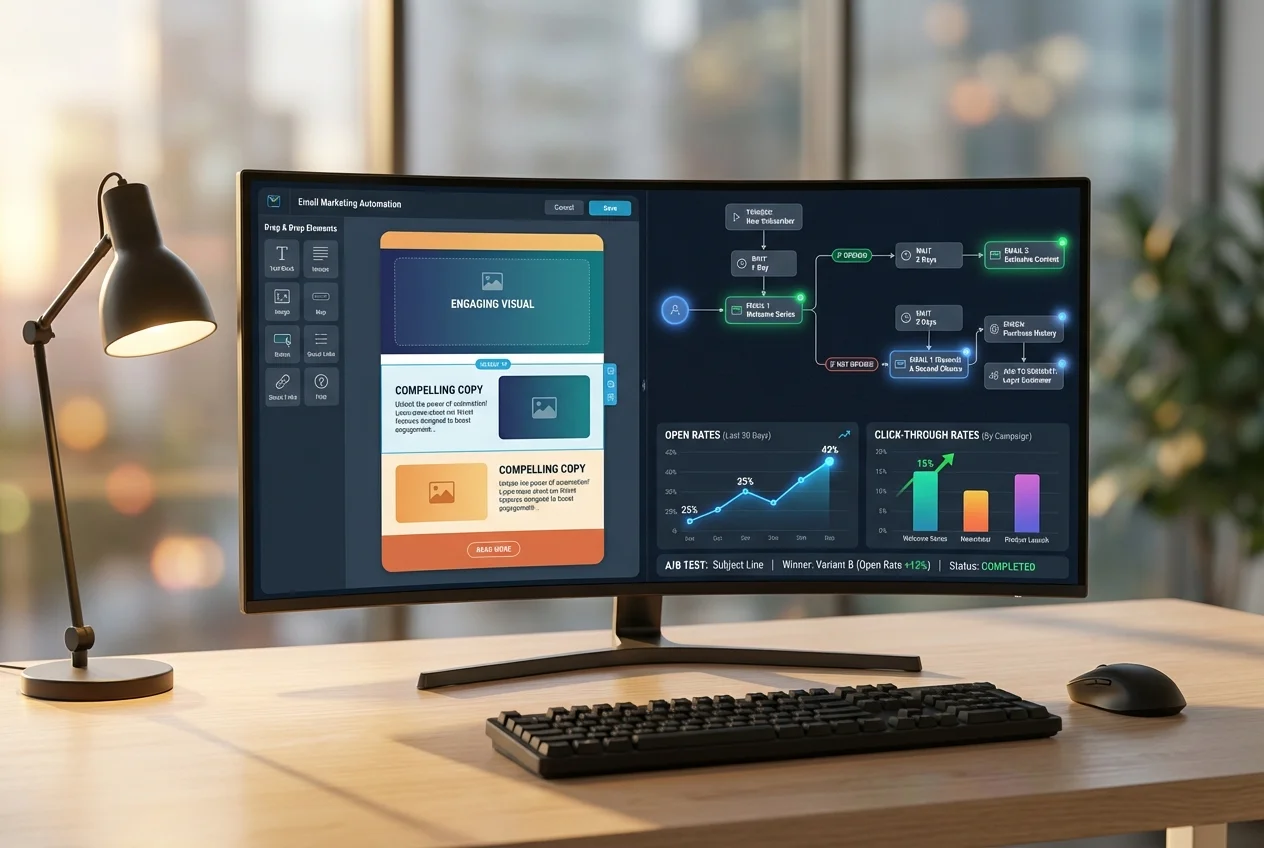
Traditional email marketing automation sends the same sequence to everyone who fits a particular criteria. AI-enhanced email sequences go further: adapting the content, timing, and call-to-action based on what each contact has already engaged with, what their company profile suggests they care about, and where they are in the buying journey.
Practical examples for UK B2B businesses:
- A prospect from a financial services company receives case studies and compliance-focused content; a prospect from a SaaS startup receives speed-to-market and integration content — the same sequence, adapted by sector.
- A contact who opened the pricing page but did not book a call receives a follow-up email addressing common pricing questions with a direct booking link; a contact who read a technical guide receives content that goes deeper on implementation specifics.
- Leads that have gone cold after initial engagement receive a re-engagement sequence triggered by specific intent signals — a return visit to the website, a LinkedIn profile view, or a new contact from the same company.
Our email marketing automation service covers the full scope of sequence design, AI personalisation layer, deliverability configuration, and performance measurement — including A/B testing frameworks that continuously improve open and reply rates.
Layer 3: Revenue operations reporting
The third layer — and the one most often missing — is the reporting infrastructure that connects marketing activity to actual revenue outcomes. UK B2B businesses frequently know their email open rates and lead volumes, but cannot answer the question that matters: which specific marketing activities generate customers that close, and at what cost.
An AI and marketing automation agency builds the data pipelines and reporting dashboards that answer this question accurately: attribution models that credit the right touchpoints across a multi-touch B2B sales cycle, dashboards that show which channels and sequences are producing qualified pipeline (not just contacts), and automated reports that surface anomalies — a sudden drop in lead quality from a specific source, an unusually high unsubscribe rate from a specific sequence — before they become significant problems. Our data pipeline automation service covers the infrastructure behind these reporting capabilities.
Why UK B2B businesses need an AI and marketing automation agency, not just tools
The major marketing automation platforms — HubSpot, Marketo, Pardot, ActiveCampaign — are capable of sophisticated automation. Most UK B2B businesses that implement them do not use 20% of their capability, because the configuration, integration, and ongoing optimisation required to make them work at full potential is a specialist skill — not something a marketing manager handles alongside campaign creation and content production.
The gap an AI and marketing automation agency fills is not the tool — it is the implementation depth and ongoing optimisation that determines whether the tool generates pipeline or just generates email. Specifically:
- Integration architecture: Marketing automation only works as well as the data it has access to. Connecting your CRM, website, paid channels, and product usage data requires clean integration design that most businesses lack the technical resource to build internally.
- AI layer configuration: The AI personalisation and lead scoring features in modern marketing platforms require significant training data and configuration to produce accurate results. Out-of-the-box lead scoring is typically wrong until it has been calibrated against your specific customer profile — a process that requires technical expertise and historical data analysis.
- Ongoing optimisation: Marketing automation systems degrade over time if not actively maintained. Sequences that converted well twelve months ago may perform poorly today because the market has changed, the prospect list has aged, or the competition has adapted. An ongoing AI and marketing automation agency relationship includes the analysis and iteration that keeps the system performing.
Specific marketing automation use cases for UK B2B companies in 2026
The highest-ROI marketing automation implementations we have built for UK B2B clients in the last twelve months:
Inbound lead qualification and instant routing
A UK professional services firm was losing deals because inbound leads sat unresponded-to for 24–48 hours while the business development team managed existing client work. We built a system that: enriches every new lead with company data from Companies House and LinkedIn, scores the lead against a five-factor qualification model, routes qualified leads to a sales rep within five minutes with a pre-populated outreach draft, and sends lower-scoring leads into a nurture sequence automatically. Response time dropped from 28 hours to 4 minutes. Qualified lead conversion rate increased by 34% in the first three months.
Account-based marketing sequences
A UK SaaS company targeting enterprise accounts needed to reach multiple stakeholders at each target account — typically a mix of technical, commercial, and operational contacts — with relevant content for each persona. We built an account-based sequence that: identifies which contacts at a target account have engaged with any content, triggers persona-specific sequences to other contacts at the same account when one contact shows buying signals, and alerts the account manager when a target account reaches a defined engagement threshold. Pipeline from target accounts increased by 52% in the first six months.
Re-engagement for cold pipeline
Most UK B2B CRMs contain hundreds of contacts that showed initial interest but never progressed. A well-designed re-engagement automation turns this cold pipeline into a consistent source of qualified opportunities. We build re-engagement sequences that: identify contacts who have been inactive for 90+ days, trigger a structured three-email re-engagement sequence with relevant new content, and route responders immediately to the sales team with full context on their previous engagement history. Typical re-engagement rates are 8–15% on cold pipeline that had previously been written off.
How to choose the right AI and marketing automation agency UK
The evaluation criteria for an AI and marketing automation agency are slightly different from a standard automation agency, because marketing automation sits at the intersection of technical implementation and commercial strategy. The questions that separate effective agencies from the rest:
- Can you show me a CRM integration you built that handles complex routing logic? Simple form-to-CRM connections are not marketing automation. Ask for a case study that shows multi-criteria lead scoring, conditional routing, and exception handling.
- How do you measure marketing automation success, and what data do you use? Vanity metrics (open rates, click rates) are not outcomes. An effective agency measures pipeline generated, cost per qualified lead, and revenue attributed — and has the infrastructure to produce these numbers reliably.
- What is your process for calibrating lead scoring? Generic lead scoring models produce inaccurate results. Ask how the agency calibrates scoring against your specific historical data and how often they revisit the model.
- How do you handle deliverability? Email marketing automation fails if emails land in spam. Ask about domain warm-up, sender reputation monitoring, list hygiene processes, and how the agency manages deliverability for cold outreach versus nurture sequences.
Our AI automation agency UK guide covers the broader evaluation framework for AI automation agencies, including the specific questions to ask in a first meeting and the red flags that indicate a lack of genuine implementation experience.
Getting started with AI and marketing automation
The starting point for an AI and marketing automation engagement is a process audit: mapping your current lead generation, qualification, and nurturing processes to identify where the highest-value automation opportunities exist. This is not about replacing your marketing team — it is about removing the manual, repetitive tasks that prevent them from doing the strategic work that actually moves the needle.
UIDB has built AI and marketing automation systems for UK B2B businesses across professional services, SaaS, financial technology, and operations technology. Our AI workflow automation service and CRM automation service form the foundation of every marketing automation engagement, integrated with your existing stack rather than requiring a platform migration.
Book a free consultation to discuss your marketing automation requirements. We will map your current process, identify the highest-ROI automation opportunities, and give you a clear picture of what an engagement would deliver before you commit to anything.
 AI Workflow Automation
 CRM Automation
 Email & Marketing Automation