AI Agency UK: How to Choose the Right Automation Partner for Your B2B Business in 2026

What does "AI agency" actually mean in 2026?
The term "AI agency" has become one of the most overloaded phrases in UK B2B services. In 2026, it is applied to at least four distinct types of business, each delivering something fundamentally different:
- AI strategy consultancies: Firms that produce AI readiness assessments, data maturity reports, and transformation roadmaps. They advise on where AI could be applied; they typically do not build anything themselves.
- Generative AI agencies: Firms focused on implementing generative AI tools — content generation, chatbots, image generation, and document summarisation. The output is usually a configured SaaS product, not a bespoke automation.
- AI software development companies: Firms that build custom AI models, train machine learning systems, or integrate AI APIs into bespoke applications. High technical depth, typically higher cost and longer timelines.
- AI automation agencies: Firms that use AI to automate specific business processes — lead routing, document processing, CRM updates, reporting, follow-up sequences. The output is working automations that replace manual work. This is what we are.
Understanding which type of AI agency UK you are engaging determines whether the engagement will produce working outcomes or a strategy document. Most UK B2B businesses searching for an AI agency are looking for the fourth type — something that automates real work — but frequently end up in conversations with the first or second type.
Why specialist AI automation agencies deliver faster ROI than generalists
A specialist AI automation agency has seen the same patterns across dozens of UK businesses: the CRM that is never updated because sales reps resent manual data entry, the invoice processing workflow that consumes two full days of finance team time each month, the lead follow-up sequence that falls apart because nobody manually monitors the pipeline. Specialists diagnose these problems in hours rather than weeks because they have solved them before.
A generalist digital agency or technology consultancy approaching the same problems starts from first principles each time. They have to research the automation tools, learn the integration landscape, and discover edge cases through trial and error — all on your timeline and budget. The difference in delivery speed and reliability is significant.
Specialist UK AI automation agencies also have established relationships with the platforms that power production automations: Make, n8n, Zapier, and enterprise-grade tools like Workato and Boomi. They know which platform is right for which type of process, which integrations require custom API work versus pre-built connectors, and where hidden complexity is likely to appear. See our AI workflow automation service for how we approach process automation across different business contexts.
What to look for when choosing an AI agency UK
The evaluation criteria that separate effective AI automation agencies from the rest:
- Production automations, not prototypes. Ask to see automations they have built that are running in production — not proof-of-concept demos. A genuine AI automation agency has case studies showing processes automated, hours saved, and error rates reduced. An agency that can only show demos and strategy presentations has not delivered production work.
- Process understanding before tool selection. The right agency maps your process thoroughly before recommending a tool. An agency that defaults to one platform regardless of your process constraints is selling a product, not solving a problem. For complex processes, the discovery phase should include process walkthroughs with the people who actually run the work.
- Ownership model. Some agencies build automations in proprietary configurations that create ongoing dependency on the agency to modify or maintain. The right partner builds automations your team can understand, modify, and extend — and trains your team to manage them. Dependency is a business risk; ownership is an asset.
- Error handling and monitoring. Production automations fail. The question is whether the failure is caught and handled gracefully or causes silent data loss. Ask specifically: what happens when a step in the automation fails? Is there alerting? Is there a retry mechanism? Is there a human-readable log? Agencies with production experience answer these questions immediately; ones without experience have not thought about them.
- Sector relevance. A UK financial services company has different data sensitivity, compliance requirements, and integration landscape than a SaaS startup. An agency with sector-specific case studies understands these constraints without requiring extensive education on your side.
Our detailed guide to choosing an AI automation agency covers the evaluation framework in full, including specific questions to ask in your first meeting and red flags to watch for in proposals.
AI agency services: what a complete engagement covers
A complete AI agency UK engagement for automation typically covers the following phases:
- Process discovery: Mapping the current state of the processes you want to automate — including the exceptions, edge cases, and manual workarounds that are invisible in a high-level description. This is where most automation projects fail: they automate the happy path and break on everything else.
- Opportunity prioritisation: Ranking automation opportunities by ROI — taking into account time saved, error rate reduction, volume, and implementation complexity. Not every process is worth automating; the highest-value work is identifying which ones are.
- Architecture design: Choosing the right tools and integration approach for each automation. This includes evaluating the APIs of the systems involved, identifying data transformation requirements, and designing error handling and monitoring from the start.
- Build and testing: Building the automation, testing it against real data including edge cases, and validating that it produces the correct output reliably before going live.
- Monitoring setup: Configuring alerting so that failures are caught immediately rather than discovered days later when data has diverged across systems.
- Handoff and training: Documenting the automation for your team and training the people who will manage it day-to-day. The automation should not require ongoing agency involvement for routine operation.
See our process consulting service for how we structure the discovery and prioritisation phase, and our workflow automation service for the full build scope.
AI agency London: does location matter?
For straightforward automations with well-understood requirements, location is largely irrelevant — a remote-first team can deliver the same quality as a London-based agency. Where being an AI agency London adds tangible value:
- Complex discovery sessions: When the process being automated involves nuance, exceptions, and institutional knowledge that is hard to surface in structured meetings, in-person walkthroughs extract significantly more useful information than video calls. Seeing the actual workflow in the environment where it runs surfaces things that would never come up in a requirements document.
- Multi-stakeholder alignment: When an automation spans multiple departments with different priorities and concerns, getting all stakeholders in the same room to resolve conflicts and align on requirements is faster than coordinating across multiple video calls and async threads.
- Regulated industries: Financial services, healthcare, and legal firms in London often require in-person engagement for security clearance, data handling assessments, and compliance reviews. A remote-only team creates unnecessary friction for these requirements.
For most UK B2B businesses, the practical answer is: choose the agency with the best track record and process methodology, and let location be a secondary factor. If you are in London and the project is complex, there is real value in working with a local team. If you are elsewhere in the UK and the project is well-scoped, a remote engagement can deliver the same result. Our London base serves both models — we work in-person with London clients and remotely with businesses across the UK. Book a free assessment to discuss your specific requirements and how we would approach your automation project.
 AI Workflow Automation
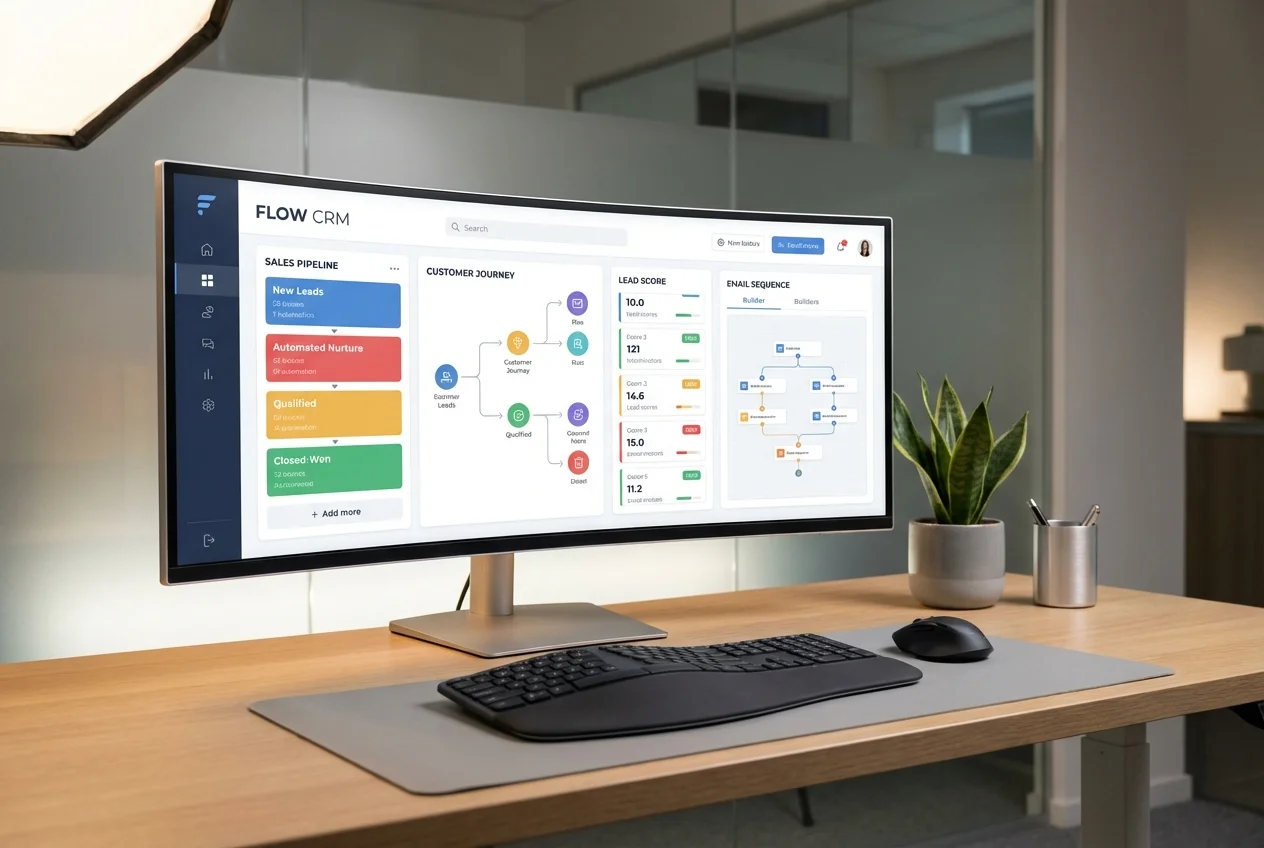 CRM Automation
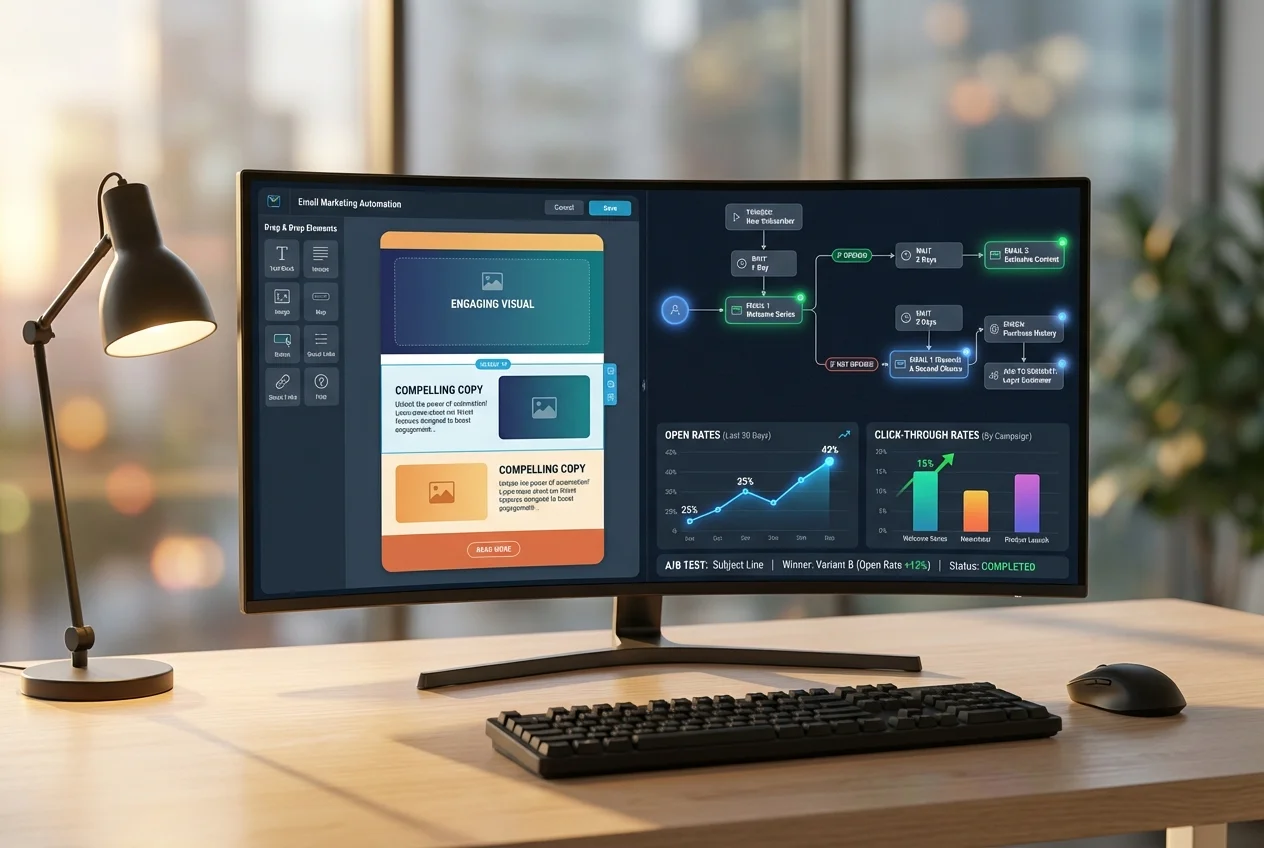 Email & Marketing Automation