AI Automation for E-commerce: The UK Guide to Scaling Operations Without Scaling Headcount
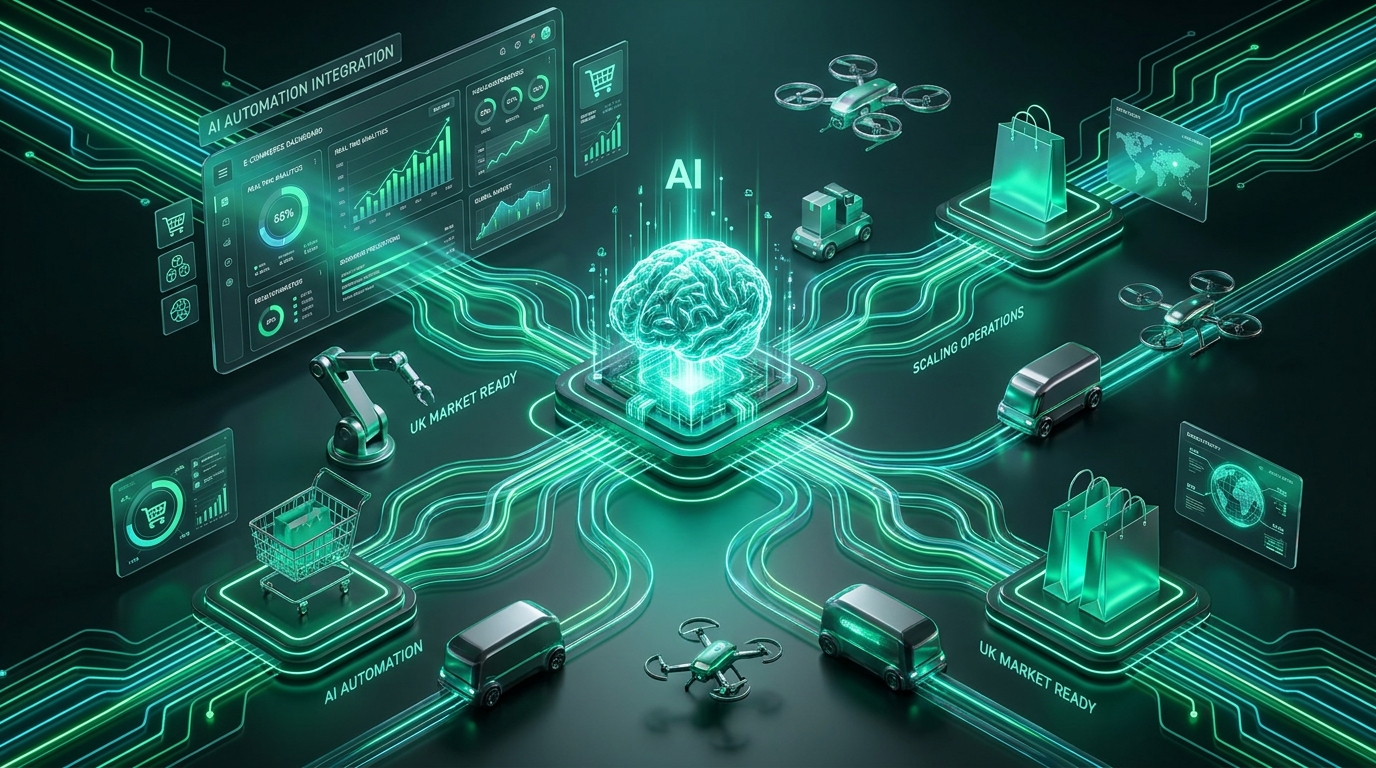
Why E-commerce Is Perfectly Suited to AI Automation
E-commerce operations generate enormous volumes of structured, repetitive work — order processing, customer enquiries, inventory updates, returns handling, review monitoring, personalised marketing — and almost all of it follows patterns that AI automation can handle better and cheaper than manual processes.
UK e-commerce businesses are under particular pressure in 2026. Rising fulfilment costs, increased customer expectations around response time and personalisation, and growing competition from both domestic and international retailers are squeezing margins. AI automation is one of the most direct levers for addressing all three simultaneously: it reduces cost, improves response quality, and enables personalisation at scale without the staff overhead.
This guide focuses on the highest-impact automation opportunities for UK e-commerce businesses — whether you're a Shopify-native DTC brand, a marketplace seller, or a mid-market retailer running your own platform.
Customer Service Automation: The Biggest Win for Most E-commerce Businesses
For most UK e-commerce businesses, customer service is the single highest-volume source of repetitive work. Order status enquiries, return requests, delivery questions, product questions — the same questions, hundreds of times per day. AI-powered customer service automation can handle the majority of these enquiries completely automatically, 24 hours a day, with response times measured in seconds rather than hours.
The difference between modern AI customer service automation and old-school chatbots is significant. Traditional chatbot systems rely on keyword matching and decision trees — customers quickly learn to work around them or give up entirely. AI agents powered by large language models understand natural language, handle unexpected phrasing, access live order data to answer specific enquiries accurately, and hand off to human agents when a conversation requires genuine judgement or empathy.
A typical implementation connects your AI agent to your Shopify or WooCommerce store data, your fulfilment system, and your returns portal. The agent can check order status, initiate a return, answer product questions from your catalogue data, and escalate complaints — all without a human team member involved. First-contact resolution rates for tier-one enquiries typically reach 70-80%, meaning your human support team only handles the complex cases.
The ROI is substantial: a team that previously handled 300 enquiries per day with four agents can handle 1,000 enquiries with two, once AI handles the routine traffic. Response time drops from hours to seconds for the majority of customers.
Inventory Management and Demand Forecasting
Stockouts and overstocking are twin margin killers for e-commerce businesses. Traditional inventory management relies on manual stock checks, gut-feel reorder decisions, and spreadsheet-based analysis that is always slightly out of date. AI-powered inventory automation changes the equation.
Demand forecasting models can analyse your historical sales data, apply seasonal patterns, factor in promotional calendars, and generate reorder recommendations automatically — updating in real time as sales data comes in. When stock drops below a dynamically calculated threshold, a purchase order is generated, sent to your supplier, and logged in your inventory system without any human intervention unless you want approval steps in the workflow.
For UK e-commerce businesses with more than 200 SKUs, manual inventory management is typically consuming 10-15 hours per week in data entry and decision-making. Automation eliminates most of that while improving accuracy — fewer stockouts, less capital tied up in slow-moving inventory.
Personalised Marketing at Scale
Email marketing remains the highest-ROI channel for most e-commerce businesses, but truly personalised email requires knowing something meaningful about each recipient — their purchase history, browsing behaviour, predicted lifetime value, and likely next purchase. Building personalised campaigns manually is time-prohibitive at scale. AI automation makes it achievable for any size business.
The key capability is AI-generated personalisation within automated sequences. Rather than sending the same "you might also like" email to your entire list, an AI-powered system generates product recommendations, subject lines, and email copy that vary based on each recipient's actual behaviour and preferences. Open rates and conversion rates for AI-personalised emails are consistently 30-50% higher than generic batch sends.
Post-purchase sequences, win-back campaigns for lapsed customers, and cart abandonment flows all benefit from AI personalisation. The automation layer handles the orchestration — who gets what email, when — while the AI handles the content personalisation that makes the difference between an email that gets opened and one that gets deleted.
Returns and Refund Process Automation
Returns processing is one of the most labour-intensive back-office functions in e-commerce. A customer initiates a return, someone logs it, a label is generated or sent, the item arrives back, it's inspected, a refund or exchange is processed. Each step involves data entry, system updates, and decision-making that AI automation can handle more reliably and consistently than manual processes.
An automated returns workflow accepts the return request from your customer portal, generates a shipping label, monitors the return tracking, triggers the refund automatically when delivery is confirmed, and updates your inventory — all without a human touching it unless inspection is required. For standard returns, the process completes end-to-end without staff involvement. Returns teams that used to spend their entire day processing returns now handle only exceptions.
Product Listing and Content Automation
For businesses with large or frequently changing catalogues, maintaining accurate, SEO-optimised product listings is a constant challenge. AI can generate product descriptions from specification data, suggest category tagging, identify missing attributes, and flag listings that need updating based on competitor or pricing changes. For marketplaces like Amazon and eBay with specific listing requirements, AI can validate and format listings automatically before submission.
Implementation Approach: What Works and What Doesn't
The most common mistake UK e-commerce businesses make when starting with AI automation is trying to automate everything at once. The result is an overambitious project that takes too long, involves too many integrations, and delivers value too slowly to maintain stakeholder buy-in.
The right approach is sequenced: start with customer service automation, because it's high-volume, has immediate and measurable ROI, and is relatively self-contained. Once that's running reliably, move to inventory management, then personalised marketing. Each stage builds on the previous one and demonstrates value clearly before the next investment is committed.
Platform choice matters. Shopify businesses have excellent native API access, which makes integrations faster. Custom-built e-commerce platforms require more work. The automation tools we use — primarily n8n and Make for workflow orchestration, combined with OpenAI APIs for intelligence — work well across all major e-commerce platforms.
We have built AI automation systems for UK e-commerce businesses at various stages of scale, including clients in fashion, home goods, and B2B distribution. If you want to see specific examples relevant to your sector or understand what a realistic implementation timeline and cost looks like for your situation, book a free consultation. We will work through your operations in detail and give you an honest assessment of where to start.
 AI Workflow Automation
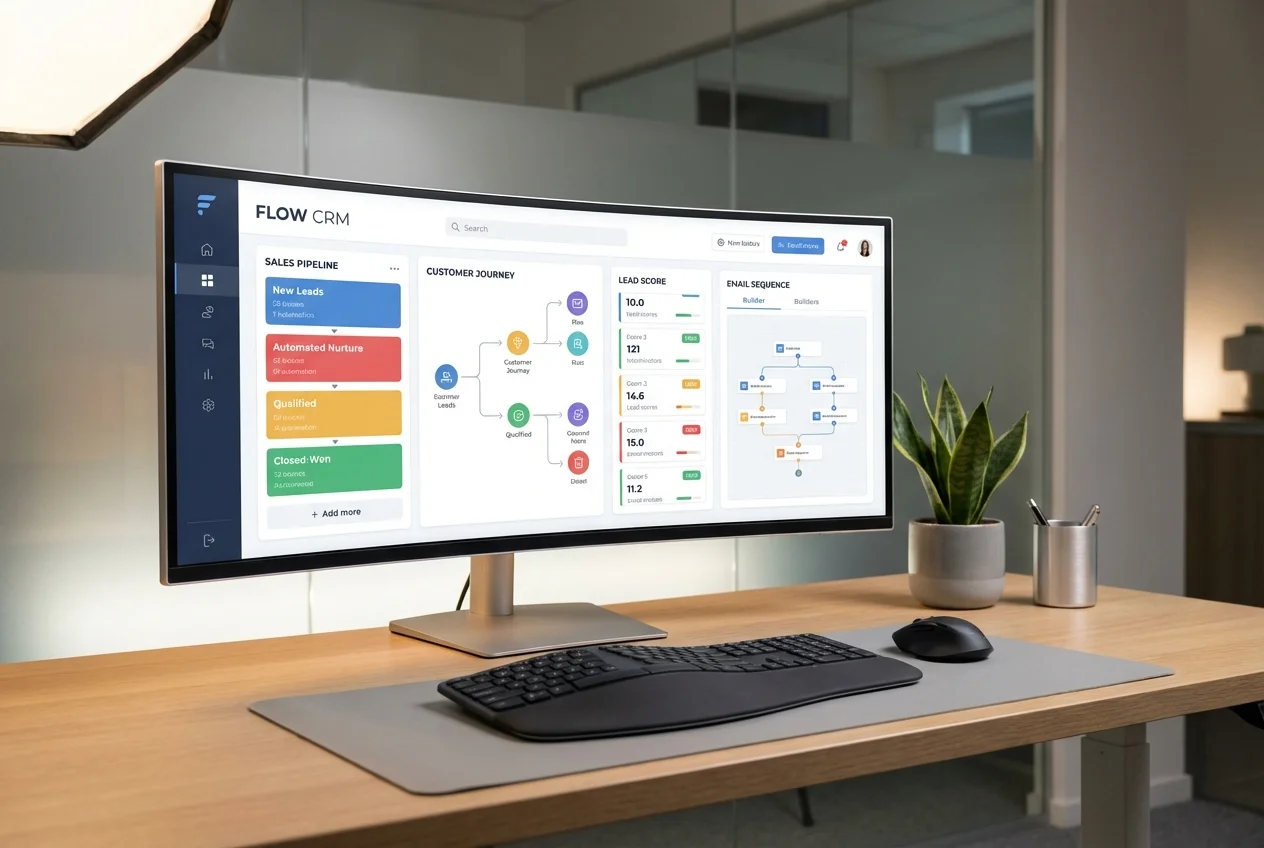 CRM Automation
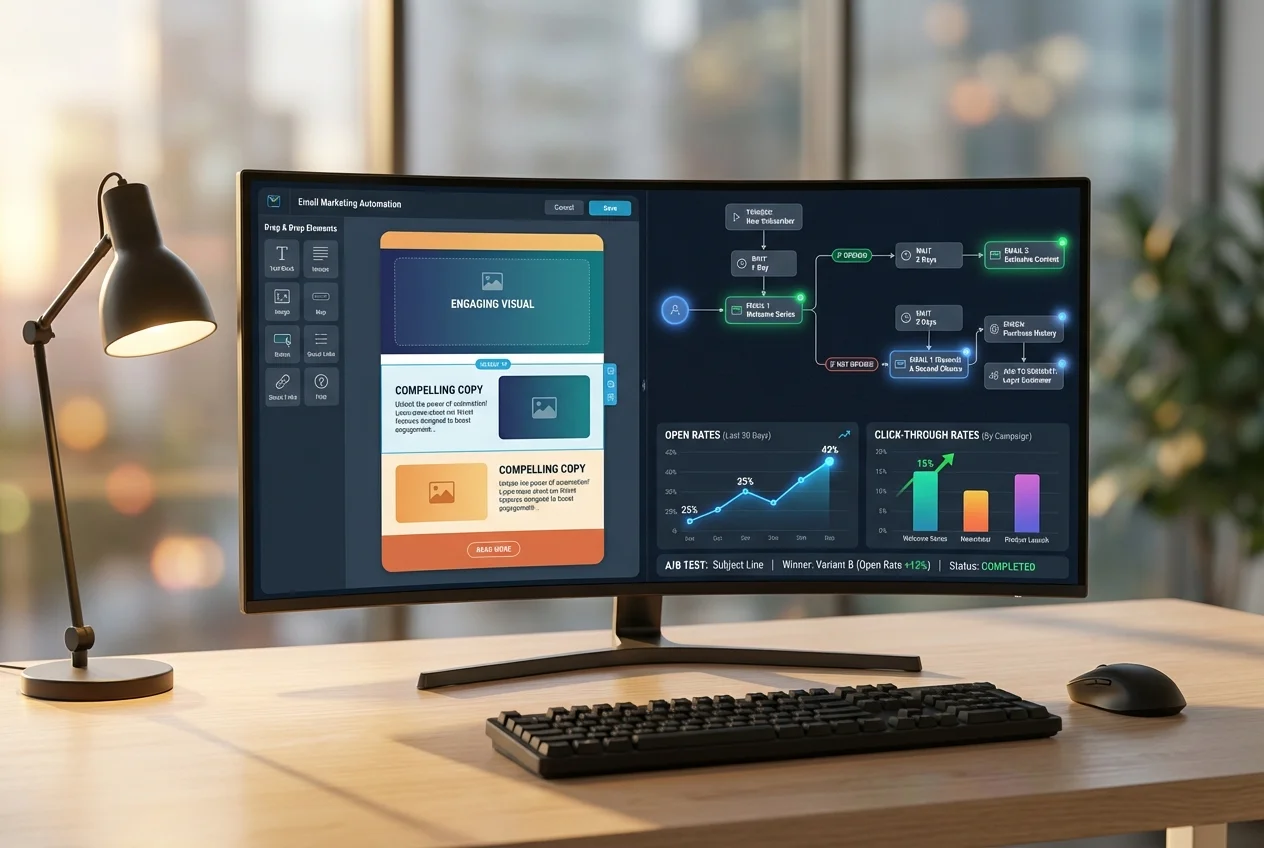 Email & Marketing Automation