AI Workflow Automation Agency UK: The 2026 Guide to Intelligent Process Automation
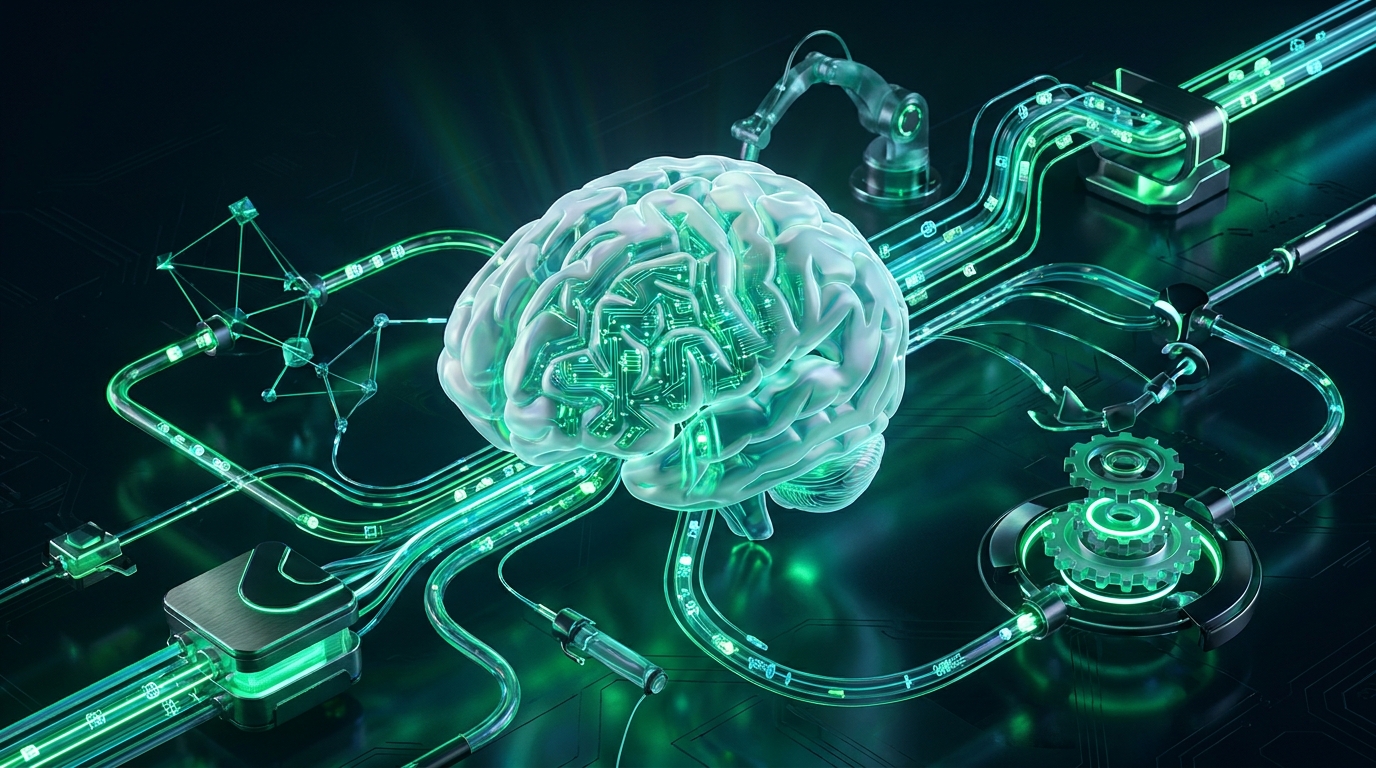
What Is AI Workflow Automation and Why Does It Differ From Traditional Process Automation?
Traditional process automation — Robotic Process Automation (RPA), Zapier-style integrations, rule-based workflow tools — executes fixed sequences of steps on structured data. It is powerful for well-defined, repetitive tasks that never deviate from their specification. But most business processes in 2026 are not like that. They involve unstructured data (emails, documents, voice), ambiguous inputs that require interpretation, exceptions that require judgement, and edge cases that occur frequently enough to break any fixed rule set.
AI workflow automation is the category that handles this complexity. An AI workflow automation system uses large language models, machine learning classifiers, and intelligent orchestration layers to process unstructured inputs, make contextual decisions, route exceptions intelligently, and learn from outcomes. The difference is not incremental — it is the difference between automating what you can automate with rules versus automating what previously required a human to think.
What Intelligent Process Automation Looks Like in Practice
Intelligent process automation (IPA) is the enterprise term for AI workflow automation applied to business-critical processes. UK organisations deploying IPA in 2026 are targeting three categories of work:
- Document-intensive processes: Invoice processing, contract review, compliance checking, medical records handling, insurance claims intake. Traditional automation failed here because documents vary in structure. AI workflow automation reads, extracts, classifies, and routes document content with 90%+ accuracy at scale — without templates, without preprocessing, and without breaking on format variations.
- Email and communication triage: Classifying inbound emails by intent, extracting action items, drafting responses, routing to the correct team or system. A UK B2B firm handling 500 enquiry emails per day can reduce manual triage time by 70–80% with an AI-powered email automation workflow.
- Multi-step decision workflows: Credit assessment, supplier qualification, recruitment screening, compliance sign-off — processes where a human reviews multiple data sources and makes a structured decision. AI workflow automation layers can generate a structured recommendation with evidence, leaving the human to approve rather than to research.
The ROI Case for AI Workflow Automation in UK Businesses
The ROI calculation for AI workflow automation differs from traditional automation in an important way: the value is not just in eliminating labour cost. It is in the quality and speed improvements that compound over time.
For a typical UK B2B business deploying AI workflow automation across two or three core processes, the economic impact breaks down as:
- Direct labour cost reduction: 0.5–2 FTE equivalents per workflow automated, typically £25,000–£70,000 per year in payroll freed for higher-value work.
- Error rate reduction: Intelligent process automation systems that extract data from documents achieve 92–97% accuracy versus 85–93% for manual data entry under production conditions. In financial, legal, or compliance contexts, this accuracy improvement has direct risk value that often exceeds the labour saving.
- Throughput and response time: AI workflow automation processes inputs 24/7 without queue build-up. UK businesses that have implemented AI-powered email triage typically reduce first-response time from four to eight hours to under fifteen minutes — a customer experience improvement that has measurable impact on conversion and retention.
- Audit and compliance trails: Production-grade AI workflow automation systems log every decision with structured reasoning, creating audit trails that manual processes cannot match and that compliance teams require for regulated industries.
How to Evaluate an AI Workflow Automation Agency UK
The UK market for AI workflow automation services grew rapidly in 2023–2024 and has since bifurcated: firms that build production systems versus firms that build proof-of-concept systems that look good in demos but fail under real operational load. The distinction matters significantly when you are automating a process your business depends on.
The questions that separate production-grade AI workflow automation agencies from demo-quality providers:
- Can you show us a deployed workflow handling real volume? Production references — not case study PDFs — are the only reliable signal. Ask to speak with the client directly.
- How does the workflow handle exceptions? Every intelligent process automation deployment produces exceptions the model is not confident to handle. A production system has a defined escalation path. A demo system has none — it either fails silently or fails noisily.
- What does the monitoring and alerting setup look like? AI workflow automation in production requires continuous monitoring: accuracy drift, latency changes, upstream API failures, edge case accumulation. An agency that does not mention monitoring in their delivery scope is not building for production.
- What is the handover model? Your business should own the workflow after delivery — the workflow definitions, the prompt registry, the eval suite, and the operational documentation. An AI workflow automation agency UK business should trust is one that designs for your independence, not your dependency.
AI Workflow Automation vs Traditional RPA: When to Use Each
The choice between AI workflow automation and traditional RPA is not binary. Most UK businesses operating at scale need both:
- Use traditional RPA for: Highly structured, deterministic processes with no variation — copying data between systems with fixed schemas, scheduled data exports, form-filling from structured databases.
- Use AI workflow automation for: Unstructured inputs (documents, emails, voice, images), variable formats, processes requiring interpretation or classification, and decision workflows where the inputs vary but the output structure is consistent.
- Use intelligent process automation (IPA) for: End-to-end business processes that combine both — structured system operations triggered by AI-classified inputs and AI-made decisions. Most enterprise automation programmes in 2026 are moving toward IPA architectures that layer AI intelligence over existing RPA and integration infrastructure.
Getting Started With AI Workflow Automation
The highest-leverage first step is a structured process audit: a two to three week engagement where we map your current manual processes, identify which are candidates for AI workflow automation (by volume, error rate, and decision complexity), and produce a prioritised build plan with fixed-price estimates for each workflow.
This gives you a deployment roadmap grounded in your actual processes — not a generic AI automation framework. Book a free AI automation assessment and we will identify the three workflows in your business most likely to generate a positive ROI within six months of deployment.
 AI Workflow Automation
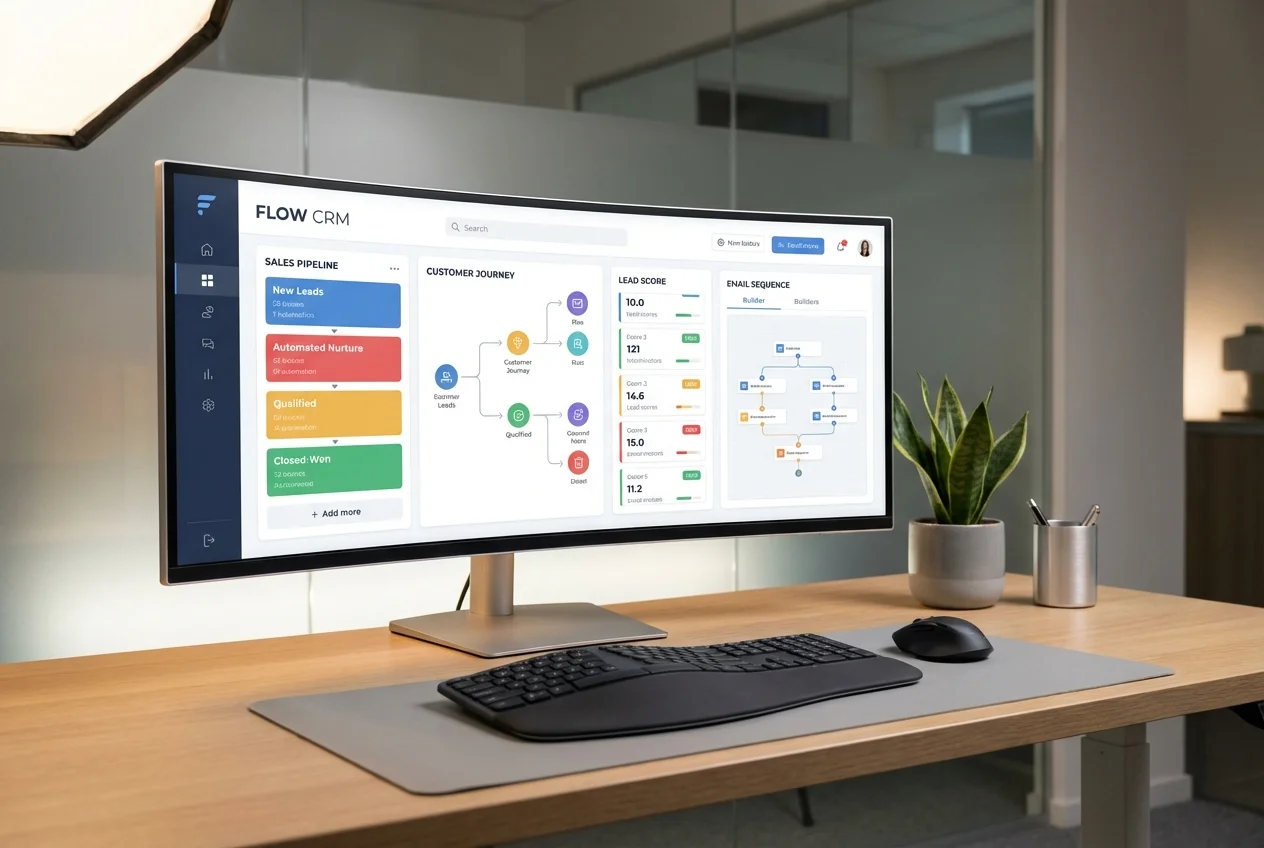 CRM Automation
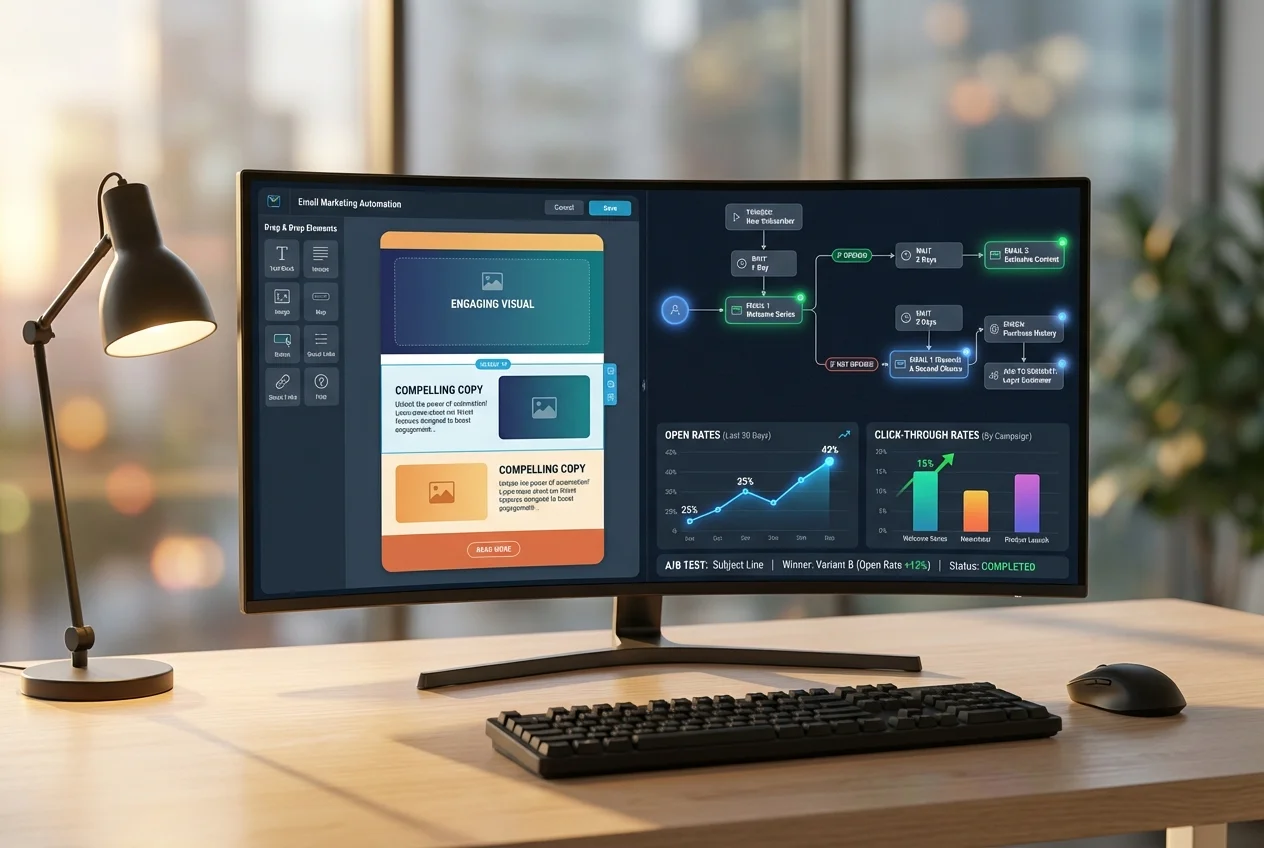 Email & Marketing Automation